
Craft — Early or Late Journal
Where the fabric begins.
A T-shirt begins long before it is cut, sewn or printed. For us, part of that beginning is in Leicester.
5 min read
Craft
Behind the fabric
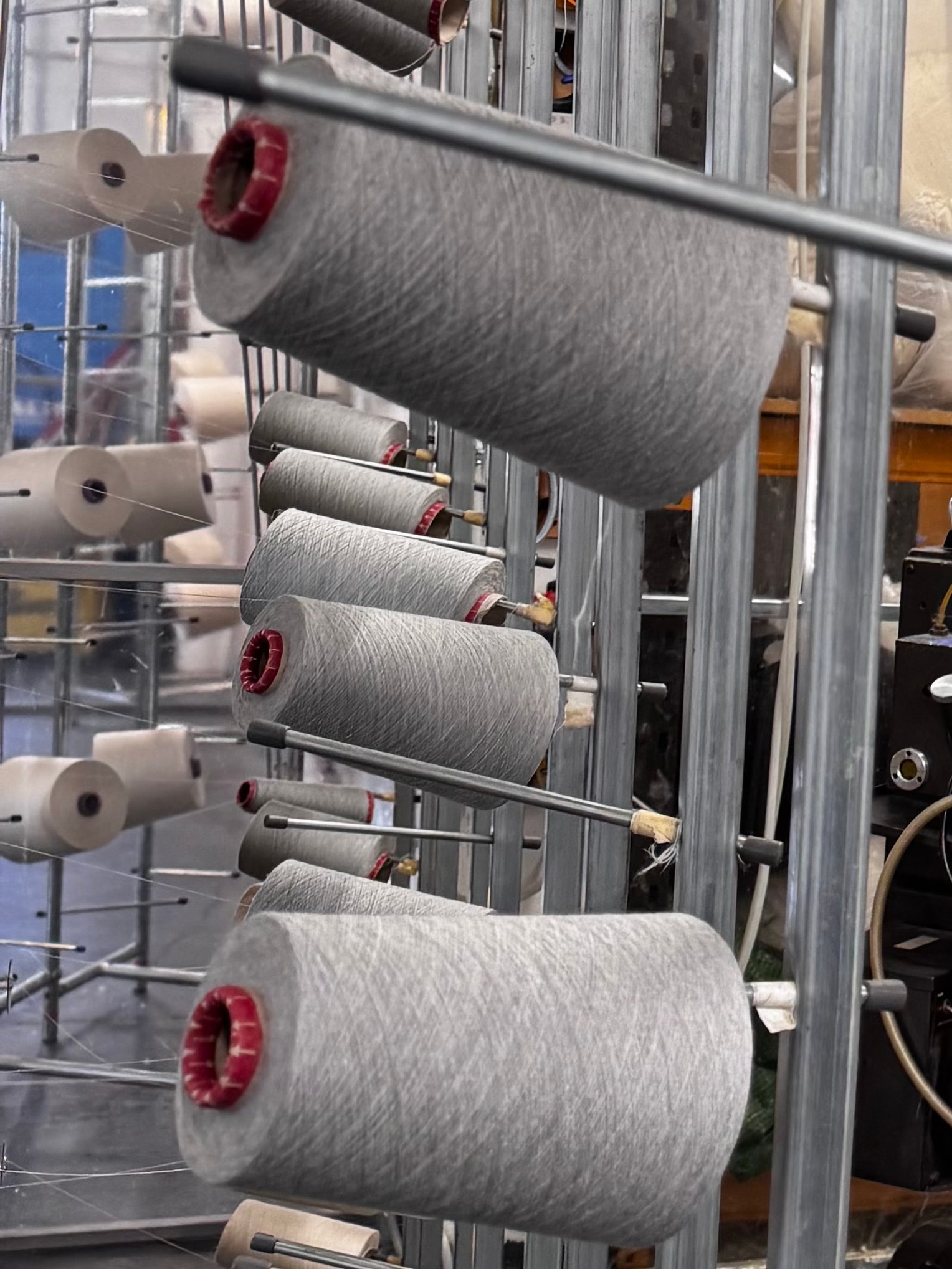
In May, while developing the first Early or Late edition, we travelled to Leicester to visit Discovery Knitting, the mill that would eventually produce our fabric.
By then, we had already spent time working on the garment. Patterns had been adjusted, samples made and different materials considered. We knew how we wanted the T-shirt to feel, but choosing fabric from samples and specifications only takes you so far.
We wanted to see where it was made and understand the process behind it. So Simon Cook invited us to the mill.
Discovery Knitting has been making knitted fabrics in Britain since 1986. Based in South Wigston, Leicestershire, the mill produces a wide range of knitted fabrics for designers and clothing businesses.
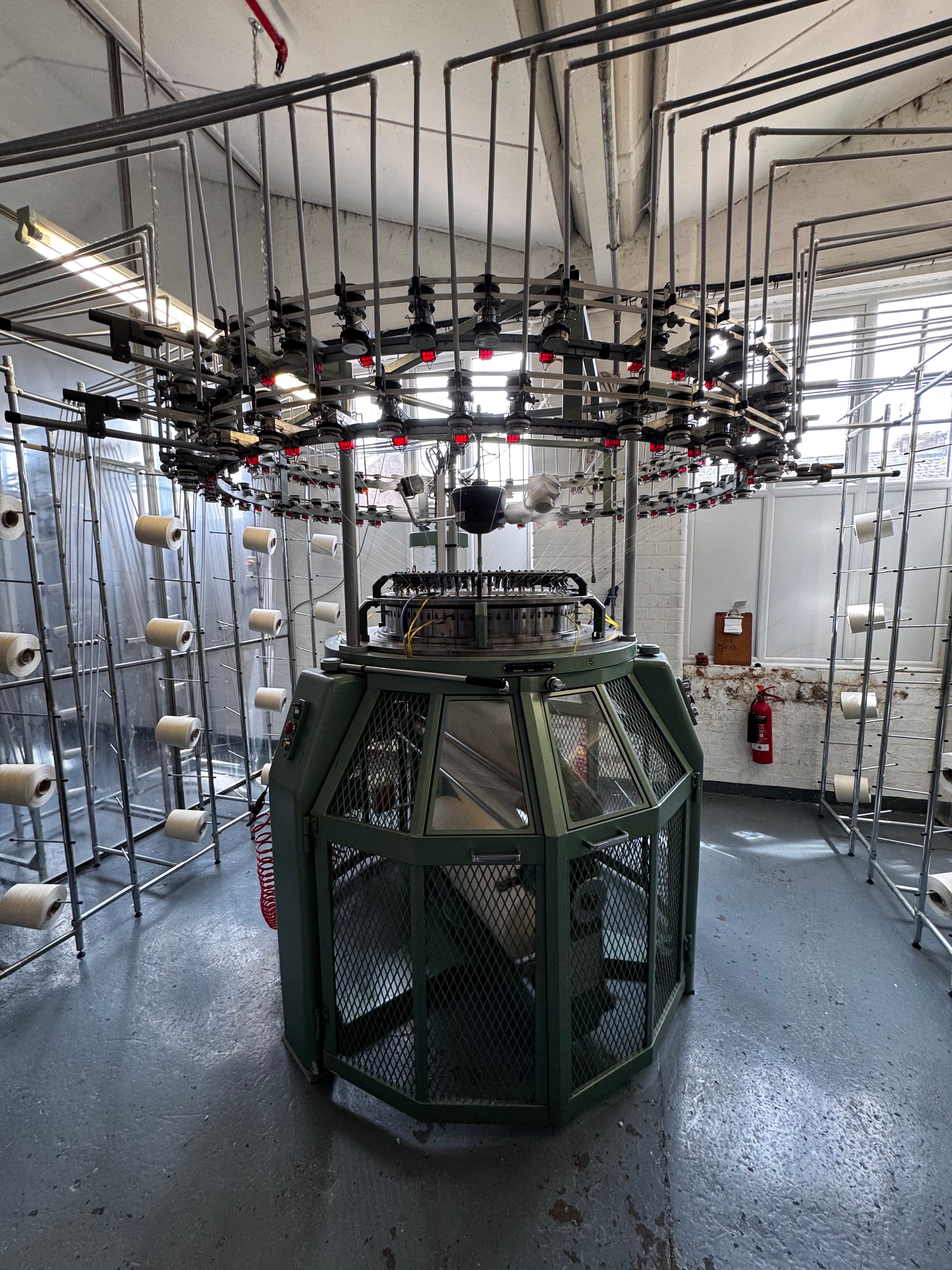
Walking through the mill with Simon gave us a different perspective on something that can appear deceptively simple. We are used to encountering fabric as a finished material: on a roll, as a swatch or already transformed into clothing. At the mill, we could see what comes before that.
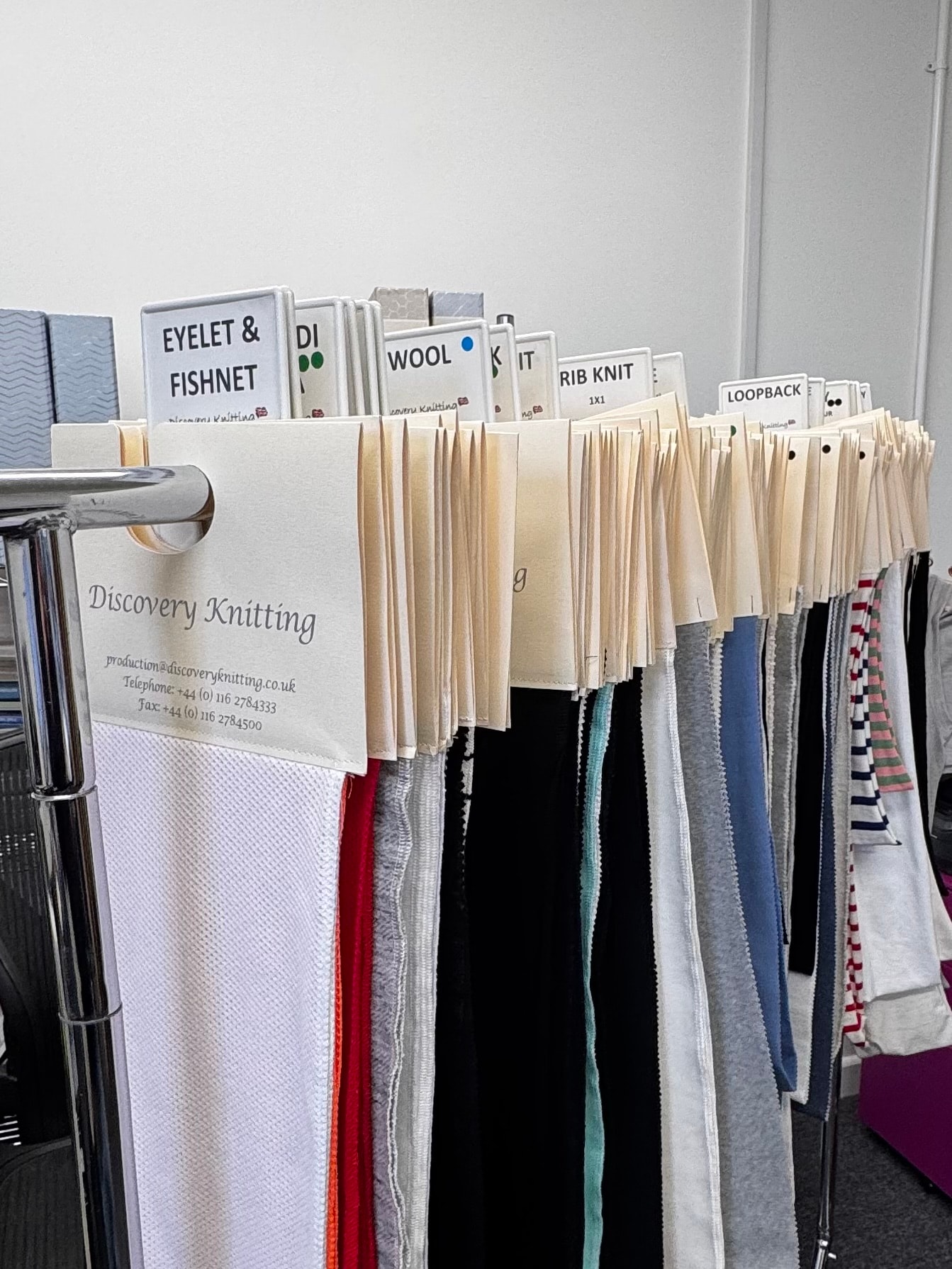
Simon took us through different fabrics and talked us through how decisions around yarn, construction, weight and finishing affect the character of the cloth — and ultimately the garment made from it.
The differences weren't always dramatic to the eye. In the hand, and particularly once you began thinking about how the fabric would behave when cut and worn, they became much more significant.
It shifted the question from Which fabric feels best? to Which fabric is right for what we're making?
Heavier isn't always better
That distinction became particularly clear when we started talking about weight.
We wanted the Early or Late T-shirt to feel substantial, and we had been considering whether a heavier jersey might give us more of what we were looking for.
There is an understandable tendency to associate weight with quality. Particularly with T-shirts, a higher fabric weight is increasingly presented as evidence of a more premium garment.
At Discovery, we considered a heavier alternative. Simon encouraged us to think beyond the number.
Additional weight would change the way the material fell, moved and responded to the shape of the garment. And because we were developing both an oversized and a cropped silhouette, the same decision could affect each differently.
The conversation helped us clarify what we actually wanted. Not the heaviest fabric we could find, but one with the right balance of substance, structure and movement.
Ultimately, we chose the same organic cotton jersey for both silhouettes.
It shifted the question from Which fabric feels best? to Which fabric is right for what we're making?
A surface for art
The decision also had to work beyond the garment itself.
Early or Late is built around limited editions of wearable art. That means we don't think of the T-shirt as a blank onto which an image is simply added at the end. The artwork, silhouette and material need to work together.
During development, we printed on the fabric and looked at how the artwork interacted with its surface. We considered not only the quality of the print, but what happened to the material afterwards and how the finished piece felt.
Testing the fabric with the artwork helped confirm that it was the right choice for the first edition.
Why Leicester matters
There was another reason we wanted to visit Discovery rather than simply order fabric remotely.
Leicester has a long history of textile and knitwear manufacturing, and specialist businesses such as Discovery continue to make fabric there today.
Discovery itself is part of a wider network. Knitting takes place at the mill, while other stages involve specialist businesses around it. Simon spoke openly with us about those relationships and, earlier in our development, even suggested manufacturers he thought could be suitable for our project.
For us, that accessibility has value. We don't believe that a British postcode automatically makes a product better. Nor do we want to turn a complicated supply chain into a simple 'Made in Britain' story.
What matters is being able to engage with the businesses involved. Visiting the mill meant we could handle different fabrics, explain what we were trying to achieve, ask questions and hear directly from someone with years of experience making them.
For a first edition, that exchange was particularly valuable.
From Leicester to London
A few months after the visit, we placed our first fabric order with Discovery Knitting.
The fabric will be knitted in Leicester before travelling to London, where it will be cut and sewn into the oversized and cropped silhouettes we have been developing. Then the artwork becomes part of it.
Each Early or Late artwork will exist as an edition of only 50 pieces. Every piece will be individually numbered, and once an edition is complete, we won't reproduce it.
Working in editions naturally makes us pay attention to what those 50 objects are made from. The artist and artwork are central, but the finished piece is also the result of its material, its shape and the different forms of craft involved in making it.
Our trip to Discovery began as a practical step in developing the first T-shirt. It also gave us the opportunity to see first-hand where our fabric comes from and meet some of the people and processes behind it.
Soon, the fabric we first handled as samples will leave Leicester for London and become part of our first edition. And that feels like a good place for it to begin.